📄 Digital book in PDF · read it on your phone or print it
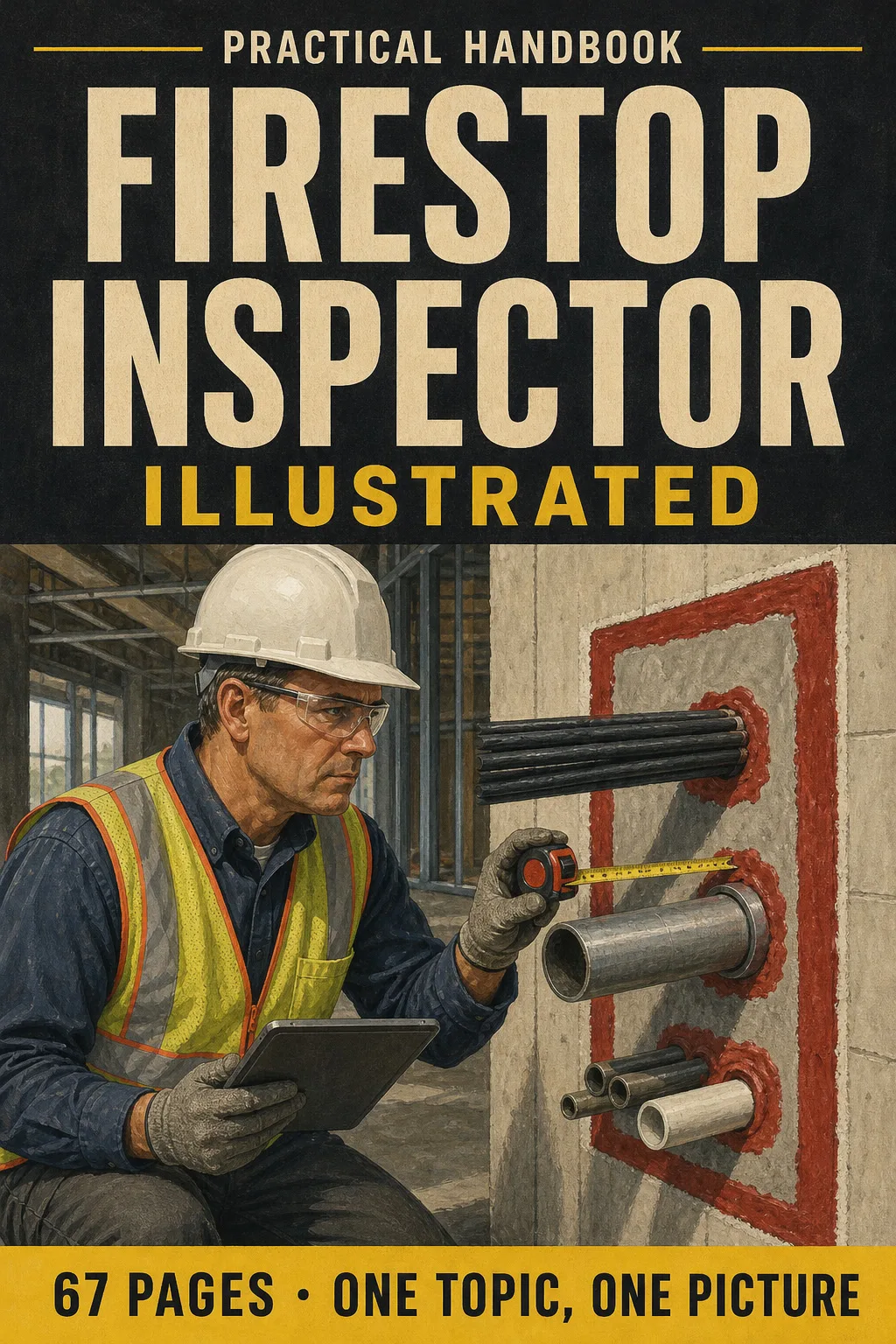
Listed system sheets, F and T ratings, annular space, fill depth, plastic pipe and cables, electrical boxes, head-of-wall joints, curtain wall perimeters and E2174 sampling. Each topic has its own page: the drawing first, then what you need to remember. 67 illustrated pages.
🔒 Secure checkout · PDF by email · 30-day guarantee
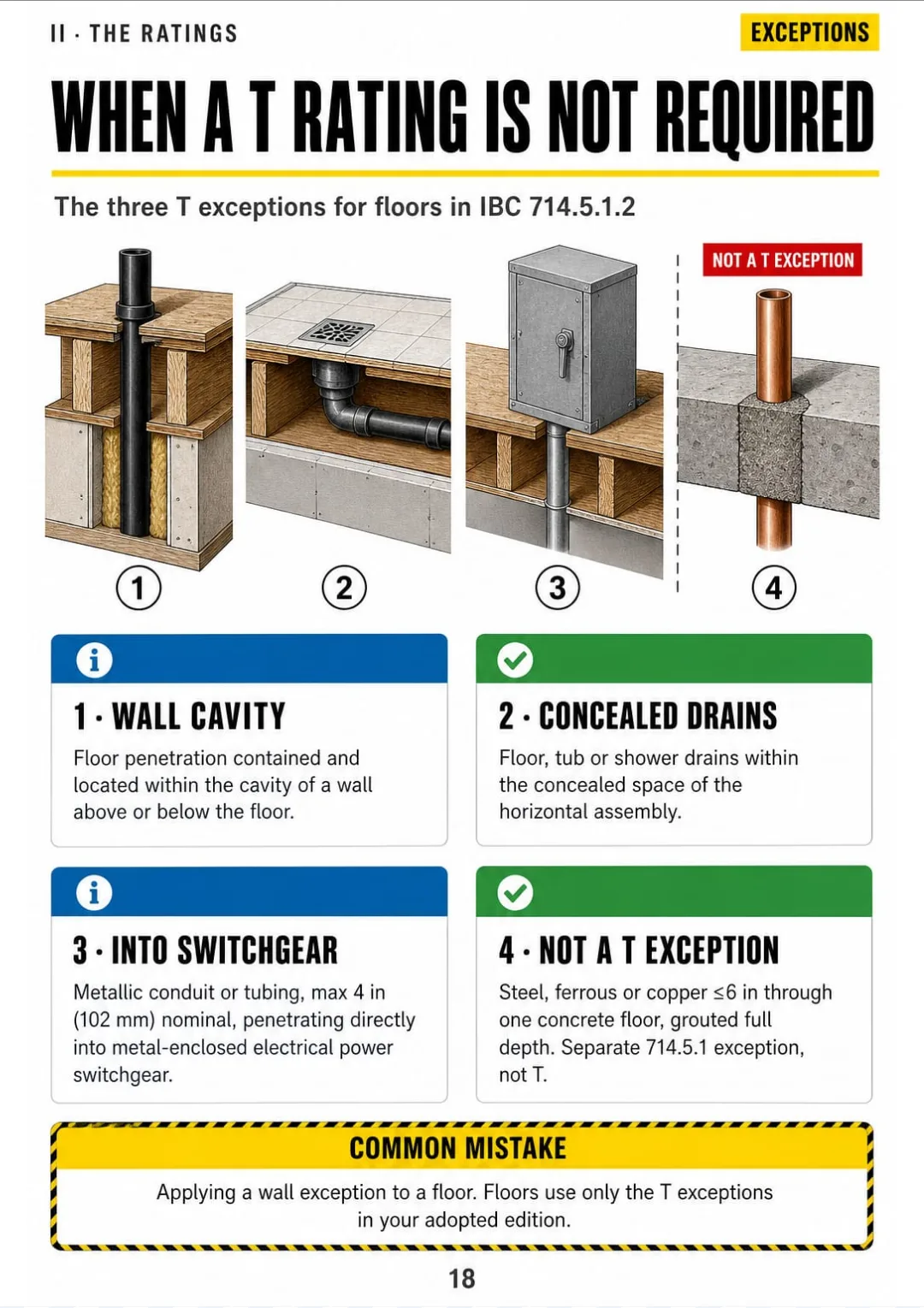
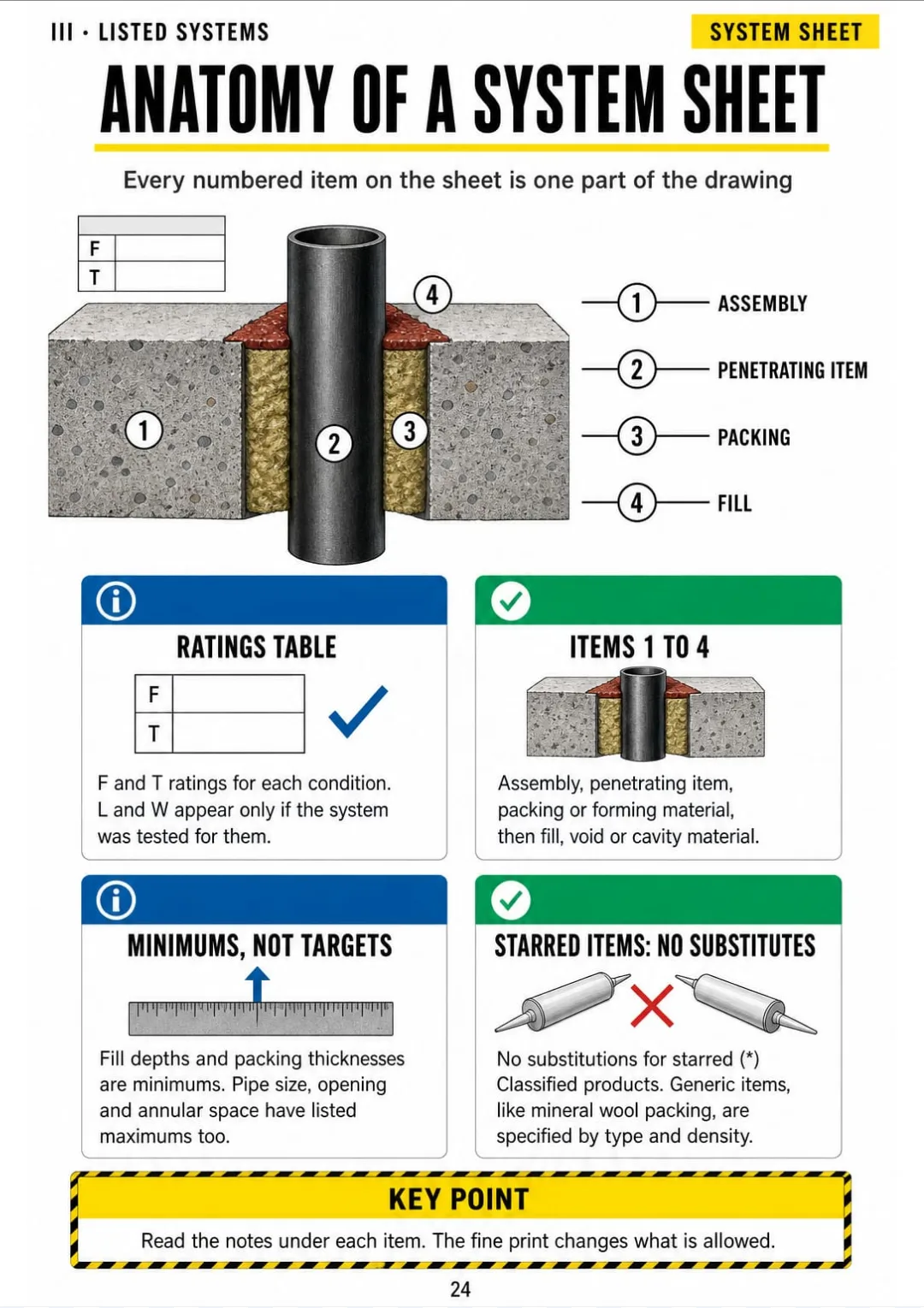
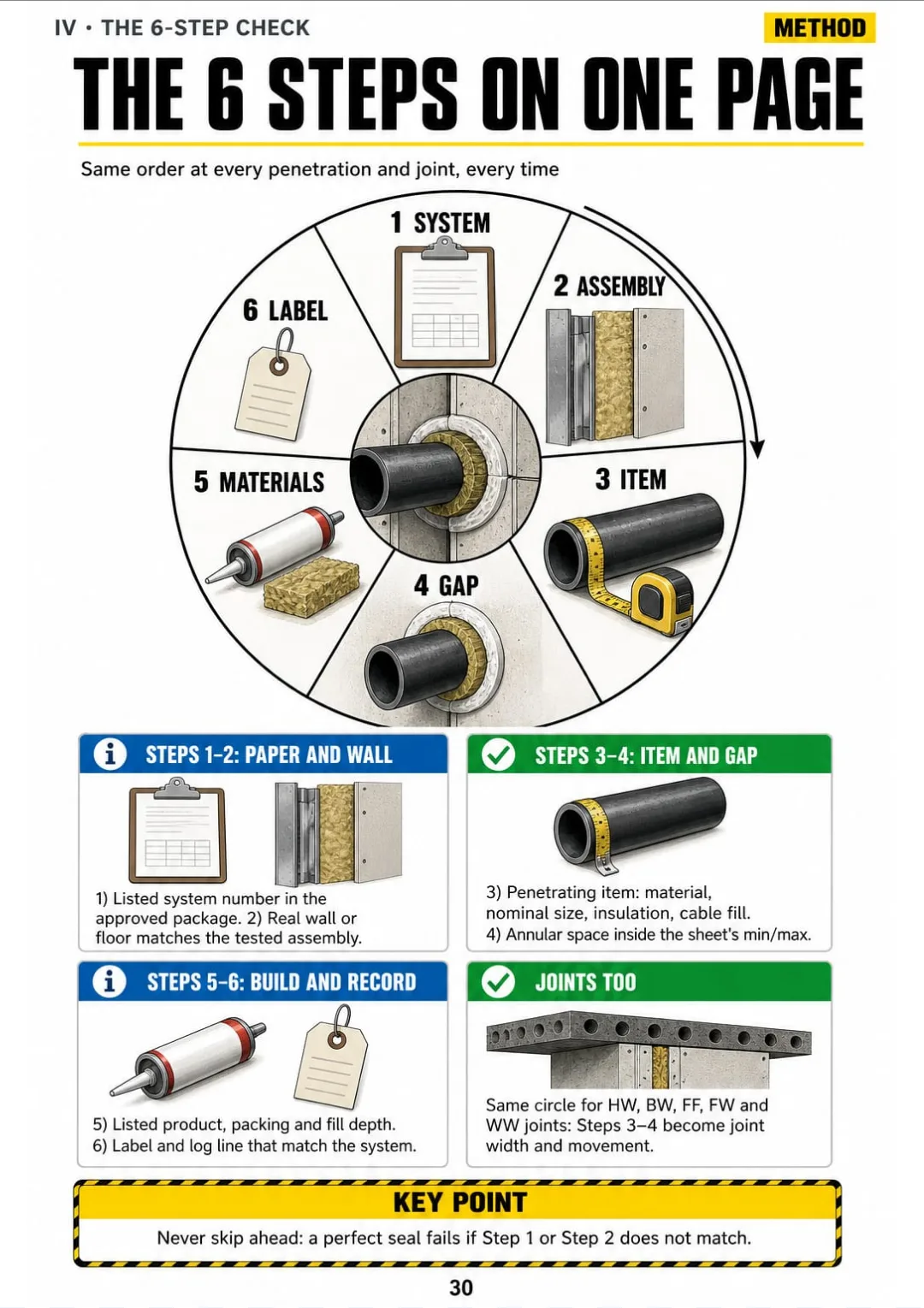
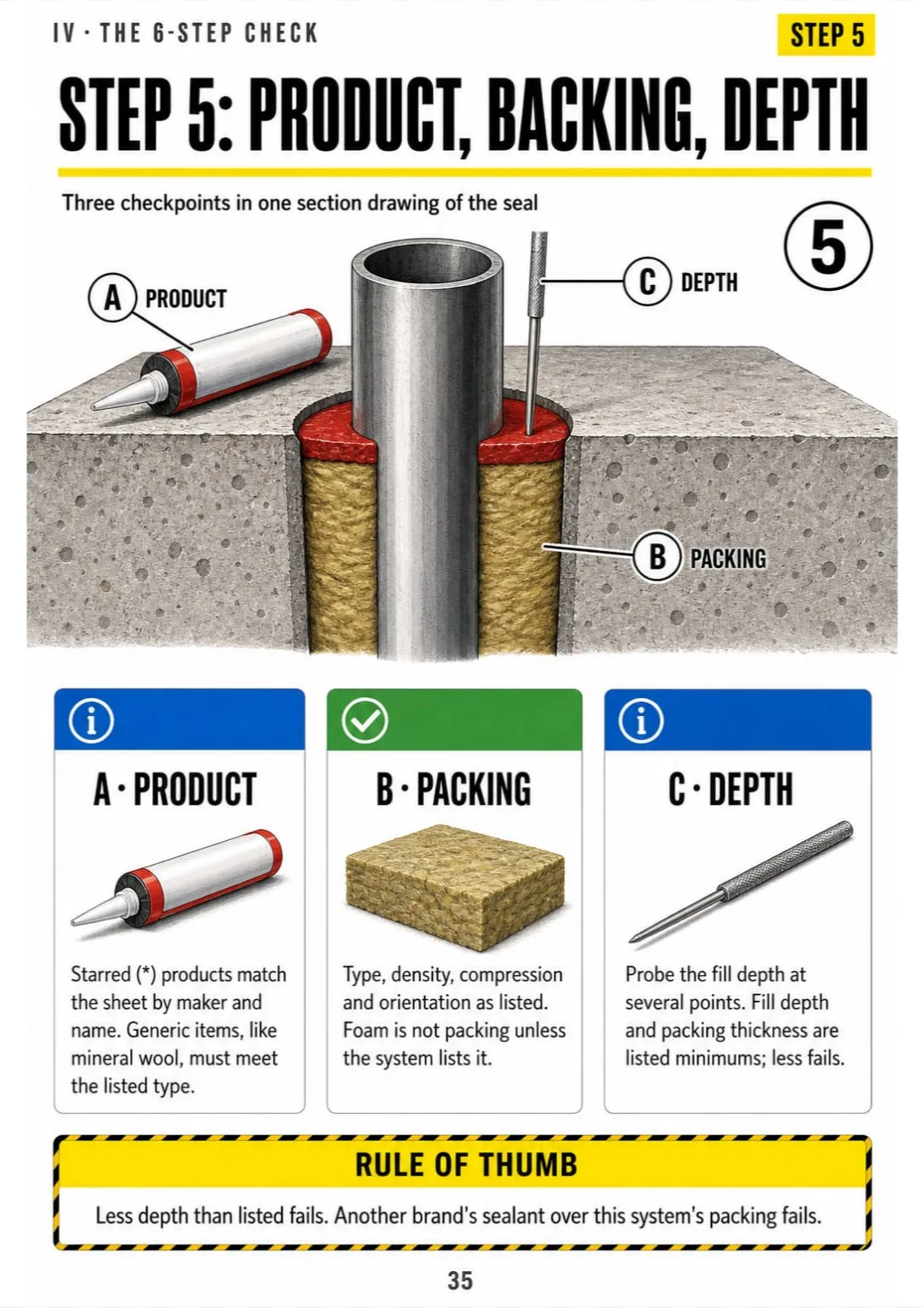
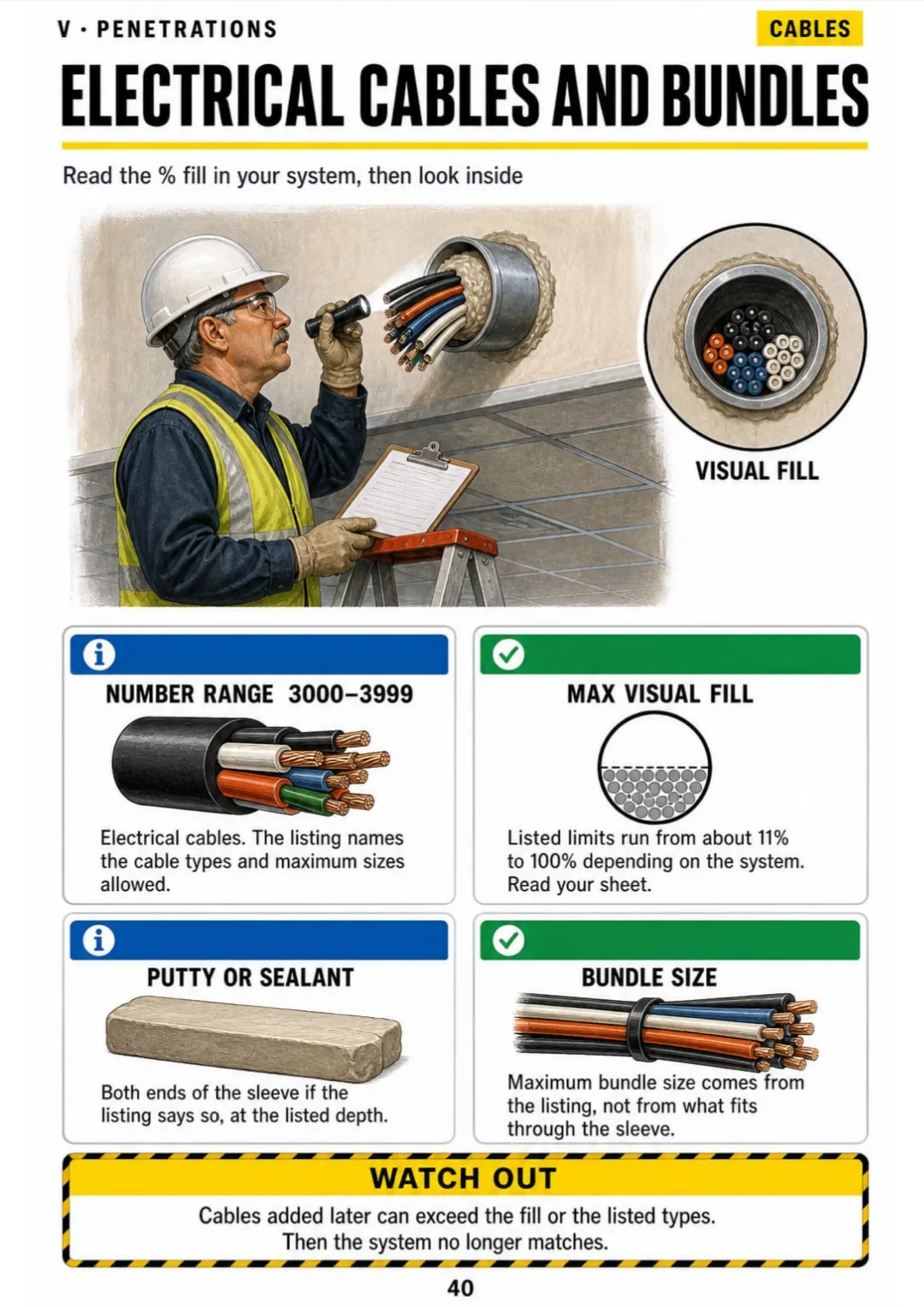
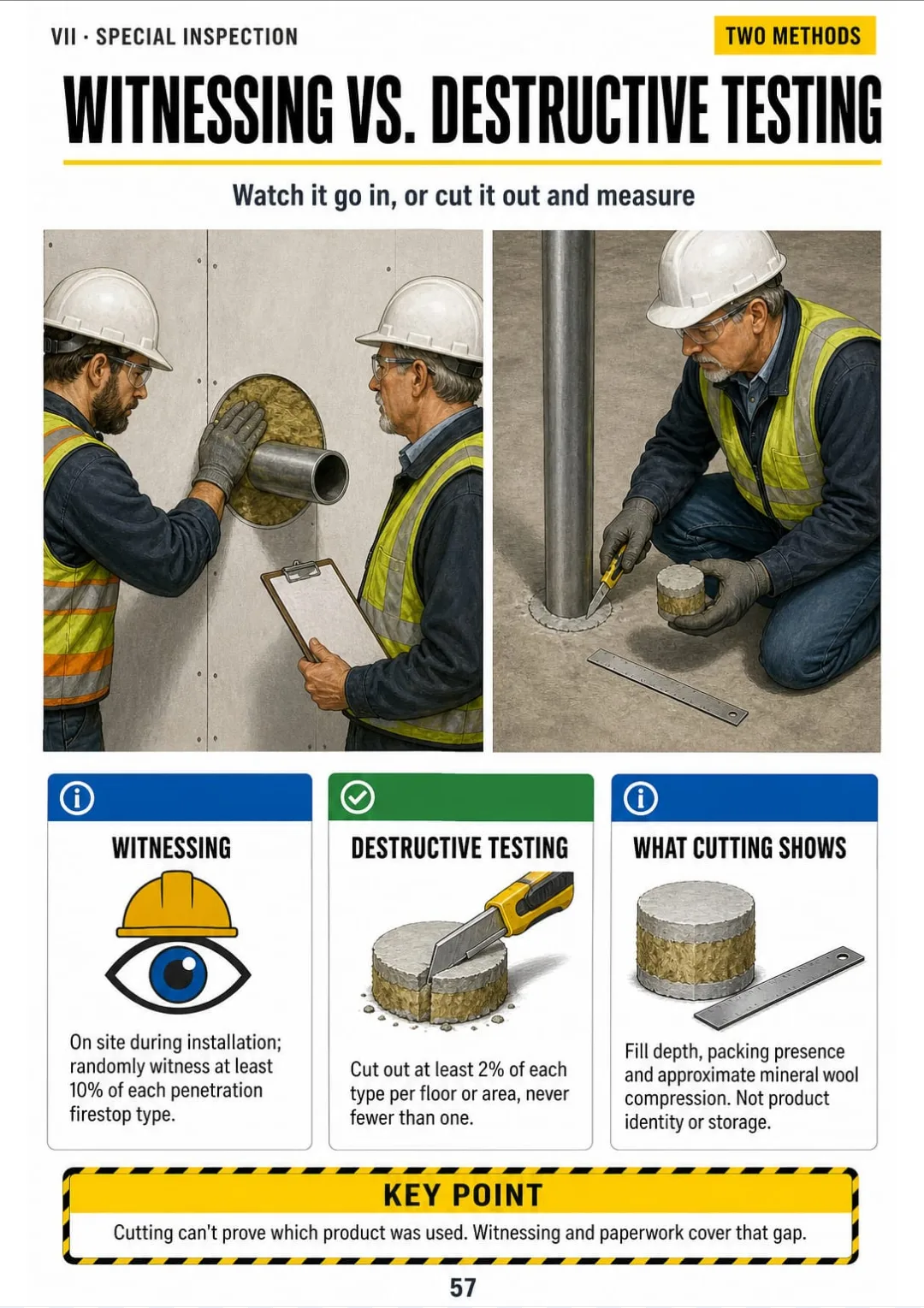
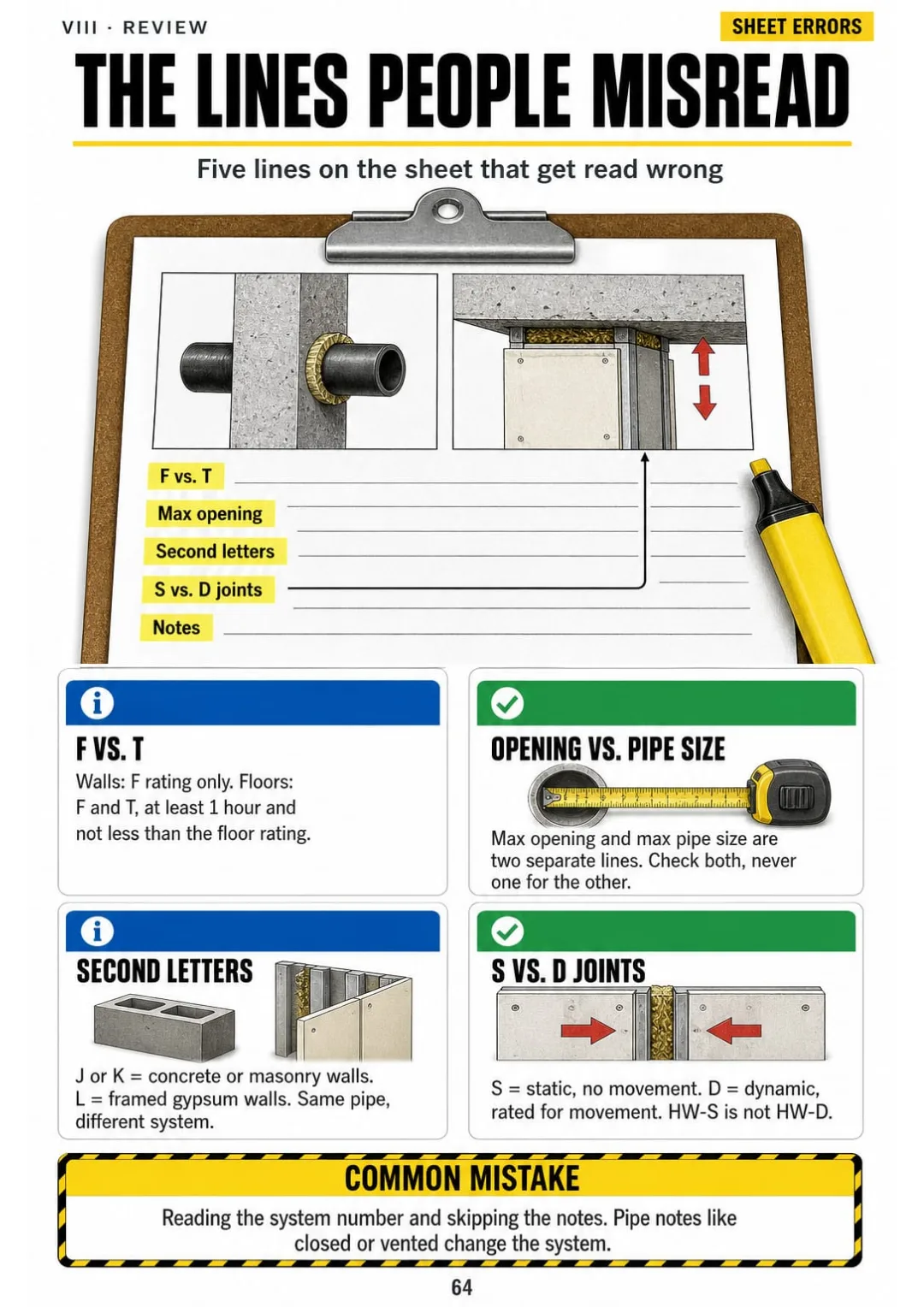
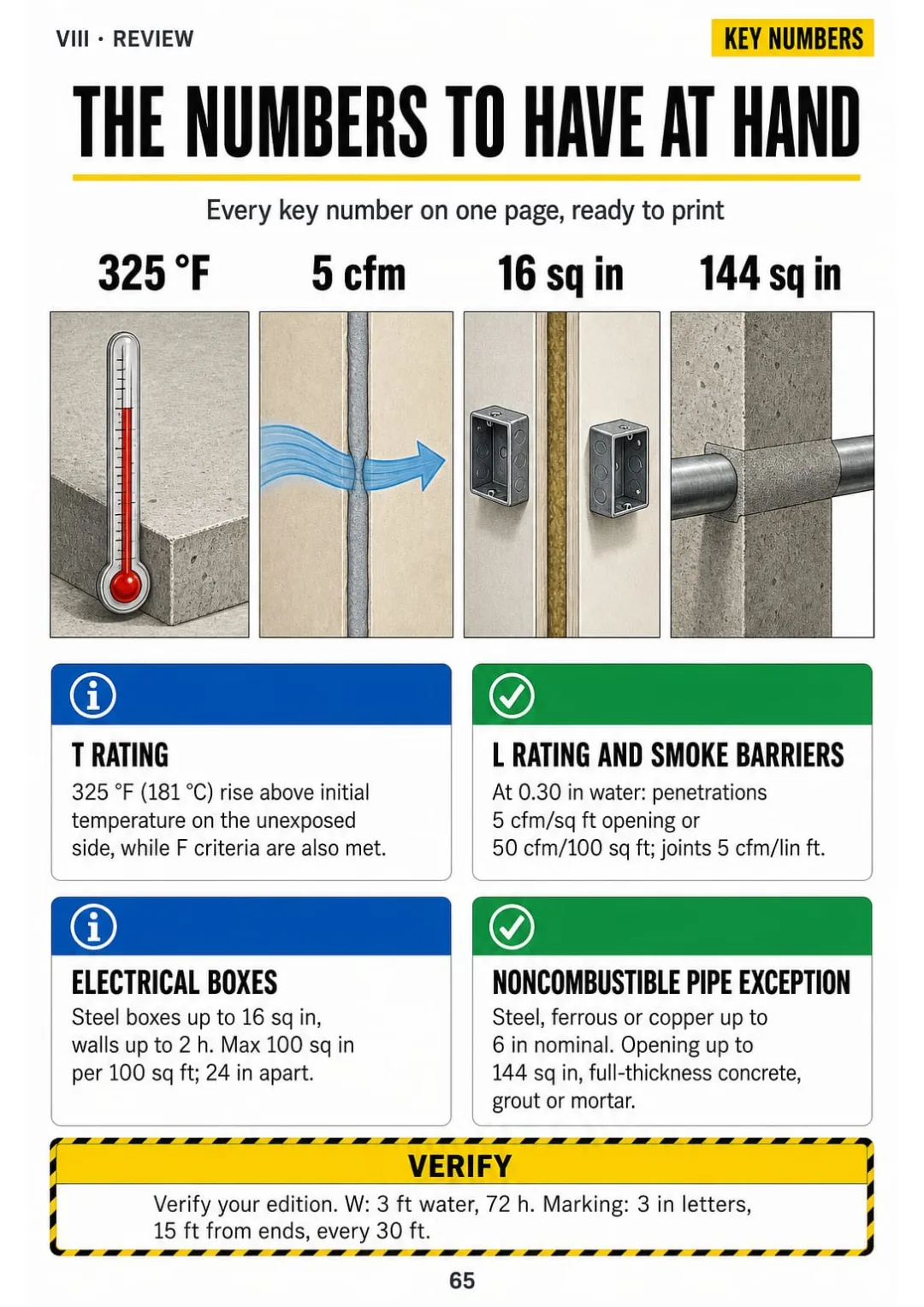
Each page has one big drawing and a box with the numbers and steps you need to know:


Swipe to see more →
These are real pages from the book. The table of contents is the full one: 8 parts and 63 topics.
You're standing under an open slab with a sealed pipe, a submittal binder and a GC waiting for a pass or a fail. And you don't know where to start.
The manual covers the check in paragraphs: system, assembly, penetrating item, annular space, materials and label, all mixed into ASTM text. Nothing tells you what comes first.

In the book, that check is one page: a circle of 6 steps, drawn. System, assembly, item, gap, materials, label, always in that order.
Same with the system sheet, the F and T ratings, electrical boxes in rated walls, head-of-wall joints and E2174 sampling: each one has its own page.
You walk the floor, run the same 6 steps on every penetration and make the call without going back to the manual.

Basics, the F, T, L and W ratings, reading a listed system, the 6-step check, penetrations, joints and perimeter barriers, special inspection, and review: 67 pages, all illustrated.
Think of it this way:
It's the night before the exam, or the morning you walk a floor, and you need to know if a plastic pipe through a 2-hour wall matches its listed system.
You open the page for plastic pipe and see it drawn: the wall, the pipe, the intumescent device, the annular space with its min and max, and the label right next to it.

Same with metallic pipe, cable trays, head-of-wall joints, the T rating exceptions and E2174 sampling: each one on its own page.
Firestop Inspector Illustrated is 67 pages: 8 parts and 63 topics, all drawn, ending with the field defects, the numbers to keep at hand, an exam review map and a pocket jobsite checklist.
What you see drawn, you don't have to memorize.
What a firestop does and doesn't do, the rated assemblies, through vs. membrane penetrations, joints vs. voids, tested vs. listed vs. approved, who does what, and wall marking above the ceiling.
F rating, T rating and the 325 °F rule, the hose stream test, L and W ratings, what the IBC requires, when a T rating isn't needed, and the smoke barrier limit.
Where listed systems live, what the letters and number ranges mean, the system sheet item by item, annular space, max opening and sleeves, packing and fill depth, pipe notes and engineering judgments.
The 6-step check on one page, then one page per step: system, assembly, penetrating item, annular space, product and depth, label and paper trail.
Metallic and insulated pipe, plastic pipe and intumescent devices, cables, cable trays, ducts, electrical boxes, the noncombustible pipe exception, multiple penetrations and gypsum walls.
Joint codes, static vs. dynamic joints, movement classes, head-of-wall under fluted deck, bottom-of-wall, curtain wall perimeters, wall continuity and the 6 steps applied to joints.
When special inspection is required, who can do it, E2174 witnessing vs. destructive testing, how many to check, E2393 sampling, what you measure, reports, and FM 4991, UL programs and the DRI.
The most frequent field defects, mistakes reading the system sheet, the numbers to keep at hand, an exam review map and a pocket jobsite checklist.
At the end of the book: Field defects drawn wrong vs. right, the numbers to keep at hand, an exam review map and a pocket jobsite checklist.
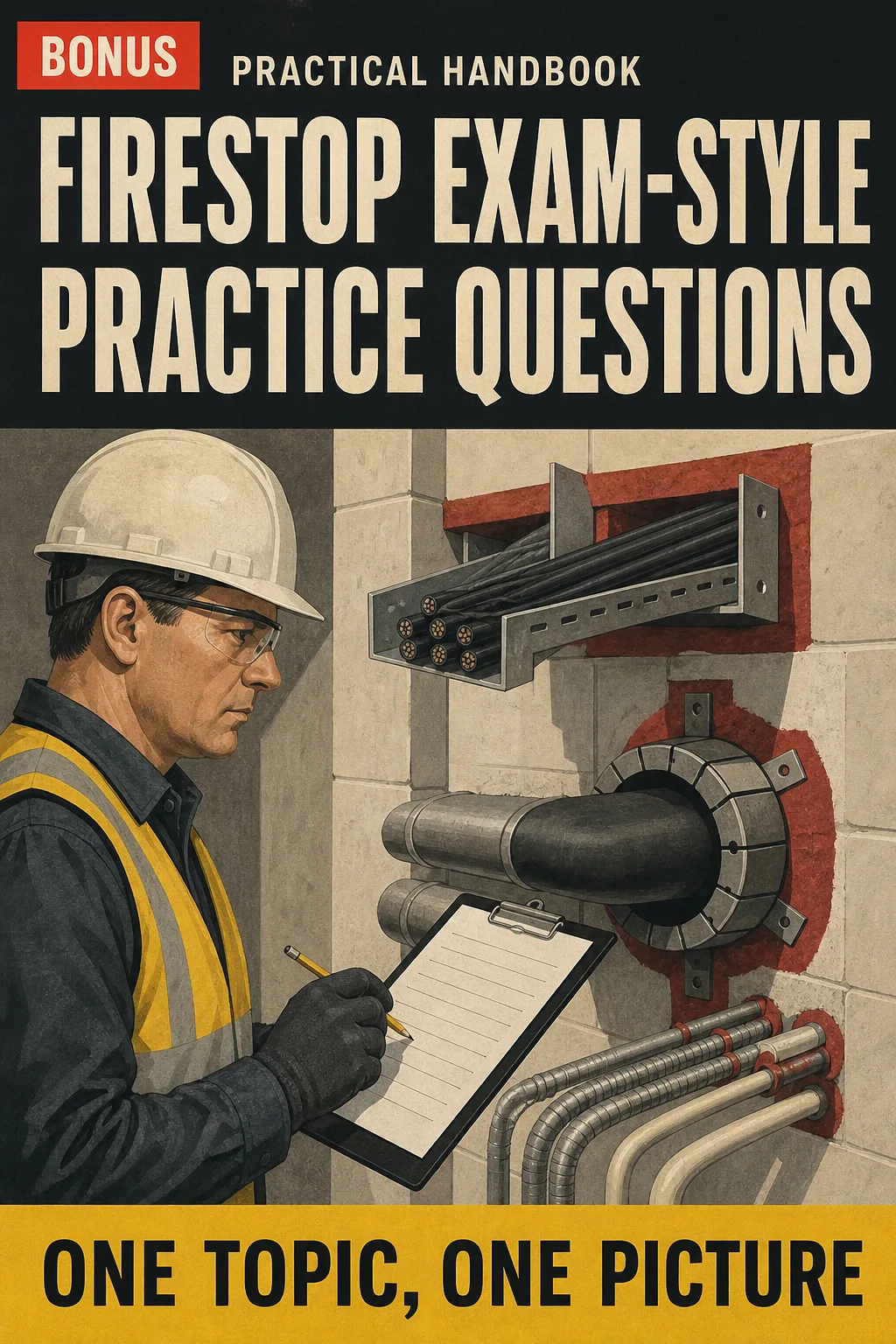
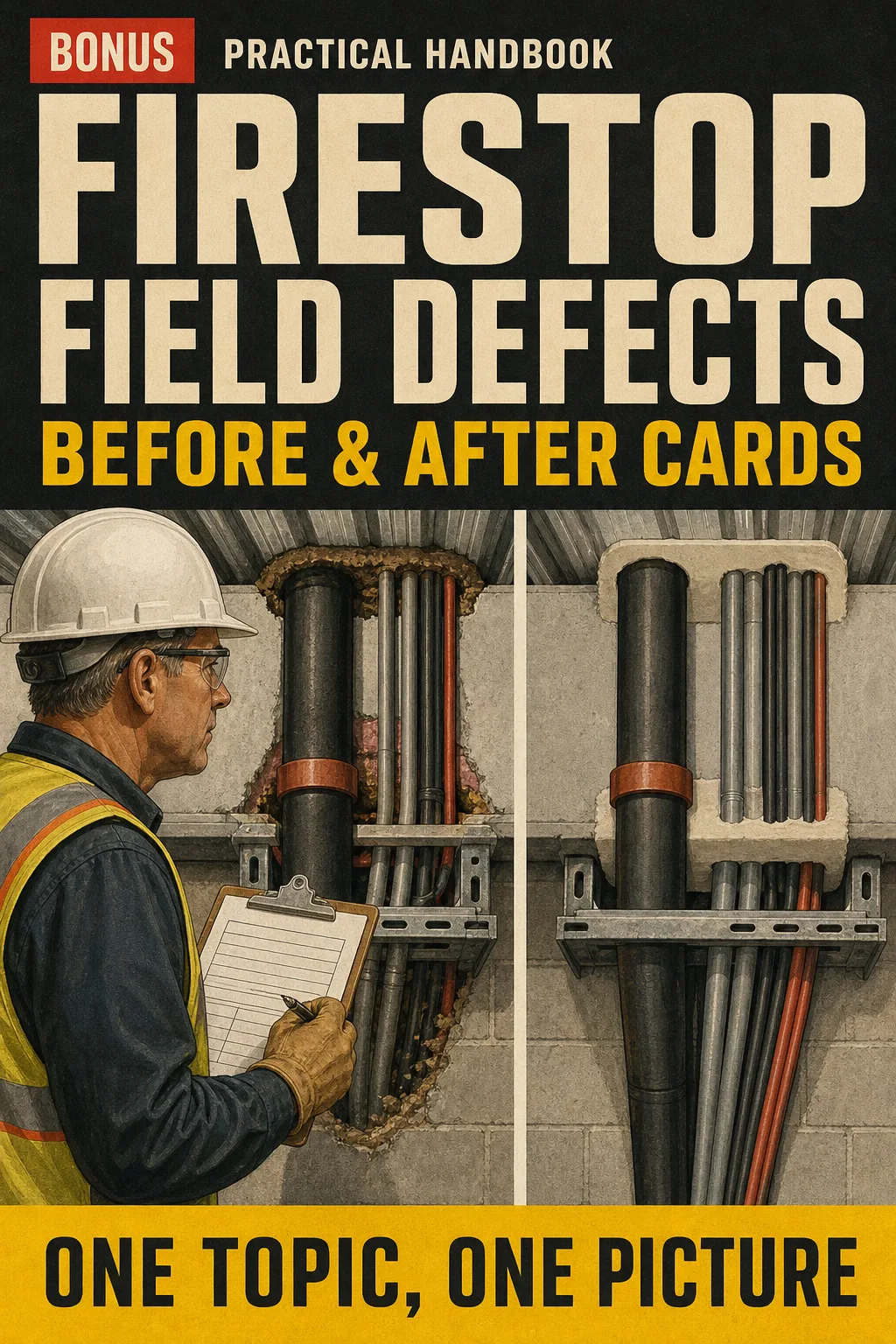
Practice questions written in the style of the firestop exams, each with the answer and the page that explains it, so you find your weak topics before exam day.

Quick cards with the most frequent field defects drawn wrong and right (short fill depth, missing backing, wrong annular space, no label) so you can review them on the jobsite in a minute.
📄 This is a digital PDF book sent to your email: nothing is printed or shipped.
PDF by email: We email you Firestop Inspector Illustrated as a PDF, together with the two free books. It's a single payment: no installments, no extra charges.
You already inspect concrete, steel or welds. The book gives you the whole firestop picture in order, one drawn topic per page, so you know what you're looking at on day one.
International Firestop Council (IFC), FM or UL firestop exam coming up: the ratings, the system sheet and the sampling rules are drawn and in one place, with the numbers to keep at hand for your final review.
Keep it printed in the truck or the site office: the same 6-step check for every penetration and joint, and the field defects drawn wrong vs. right.
📄 This is a digital PDF book sent to your email: nothing is printed or shipped.
Try Firestop Inspector Illustrated for 30 days, bonus books included.
We refund everything if the file won't open, if the book isn't what you see here, if you were charged twice or if the email doesn't arrive. Just email us.
You pay once. No subscriptions.
Yes. If you inspect concrete or steel and are new to firestop, it starts from the basics: the IBC firestop requirements, the F, T, L and W ratings, how to read a listed system, penetrations and joints, and E2174/E2393 inspection. It also covers what the International Firestop Council (IFC), FM and UL firestop exams have in common, with a page on FM 4991, the UL programs and the DRI. It isn't the official study guide for any of them, so check your exam's own reference list. If you already install firestop, you'll spend most of your time on the 6-step check and the field defect pages.
Written against the 2024 International Building Code (Sections 714, 715 and 1705) and the current editions of ASTM E814/UL 1479, ASTM E1966/UL 2079, ASTM E2307, ASTM E2174 and ASTM E2393. If your jurisdiction adopted an earlier IBC, some section numbers and exceptions can differ, so check the edition that applies to your project.
No. It's an independent illustrated study aid. It isn't published or endorsed by the IFC, FM Approvals, UL, ASTM or the ICC, and the system numbers in the drawings are teaching examples.
No. It helps you study and review, but it doesn't give you a certificate, a credential or continuing education credits. It doesn't replace formal training, the code, the manufacturer's instructions or the actual listed system documents.
No. They're written for this book, in the style of the firestop exams, each with the answer and the page that explains it. They aren't official exam questions.
The book and the 2 free books come as a PDF by email, to the address you enter at checkout.
No. It's a one-time payment. No subscription.
Yes. The PDF is printable, so you can print the whole book or just the pages you want to keep on the jobsite.
You have 30 days. We refund everything if the file won't open, if the book isn't what you see on this page, if you were charged twice or if the email doesn't arrive: just email us.
No more rereading without anything sticking.
Annular space and fill depth: you see them drawn, and that's it.
You walk into the exam knowing where everything is.
Drawings make studying faster.
The book is right below.
One-time payment: US$ 27 · Guarantee: 30 days · PDF by email
YES, I WANT FIRESTOP INSPECTOR ILLUSTRATED FOR US$ 27📄 This is a digital PDF book sent to your email: nothing is printed or shipped.